In the fuzzy picture above a sculpture of a house maid is cast in gold which contrasts with your traditional image of a maid. A chair seems to dissolve into the ground as a sign of decay, a theme that ran thru the entire house.

A set of stairs did not seem to be functional or leading up to anywhere as it was supposed to. A richly-set dining table (not pictured) was fractured in the middle, including the plates on it, overlooked by a collage of signs made by street bums from across the world, begging for money, in contrast to the once idyllic scene of modern family life. Read NYTimes T Magazine feature on this pavillion.
The second exhibit space in the Danish & Nordic pavillion was a well-appointed modernist house furnished with iconic scandinavian furniture and provocative art.

Visitors approached the residence from the pool where a dead body greeted them floating in the pool, either as a result of murder or suicide, leaving the visitors in suspense of a mystery unfolding.

There was a narrative developing as visitors entered the residence and started viewing the Polynesian sculpture having a dialgoue with its modern counterpart next to it, a black and white photograph by Wolfgang Tillmans, with naked men lazing down on a lawn.


While proceeding further into the residence, visitors encountered two paintings by Hernan Bas, a Miami artist known for his gay themes (Please see my April 2009 posting for more on Hernan Bas).


Next installation revealed a set of Tom of Finland drawings with depictions of men having raunchy sex, further moving the viewer into a gay subtext.

Next was a pair of sculptures of Michalengelo's David by controversial New York artist Terence Koh, adding a contemporary interpretation of a classical work (and a prominent gay icon).

Behind the minimalist living room organized around a fireplace was a set of Vibeke Slyngstad paintings that hinted at the fictional resident's sophisticated collecting taste.


As one approached the corner end of the house, a desk built by Simon Fujiwara revealed the mystery to the entire residence/installation. A manuscript on a typewriter; a collection of photographs; and clippings revealed a suspense novel in the making, in which the protagonist, a rich gay collector, ends up drowning in his own pool. The suspense was over. All the pieces of art now came together to complete a narrative and solve a puzzle for visitors who did not know what they were getting into in the first place. It was a very clever installation.

The Danish and Nordic Pavillion set itself apart from the other international pavillions by telling a story though international artists' work rather than representing national artists for self promotion.
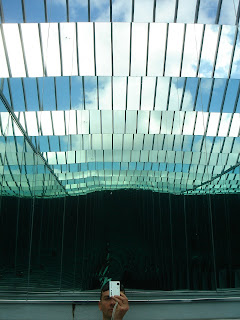
On a parting note, i could not resist the construction of the ceiling in the pavillion.